ARTIFICIAL INTELLIEGENT IN DIGITAL ERA

The Use of AI Tools in Digital Marketing

In today’s fast-changing digital world, businesses are constantly searching for smarter ways to connect with customers, improve efficiency, and increase sales. Artificial Intelligence (AI) has become one of the most powerful technologies transforming the marketing industry. From content creation and customer support to data analysis and advertising, AI tools are helping marketers work faster, smarter, and more effectively.

Digital marketing once relied heavily on manual efforts and guesswork. Today, AI-driven tools provide deep insights into customer behavior, automate repetitive tasks, and personalize marketing campaigns at scale. Companies of all sizes are now using AI to gain a competitive advantage in the online marketplace.

This blog explores the use of AI tools in digital marketing, their benefits, applications, challenges, and future potential.Continue reading

Why Every Digital Marketing Strategy Needs a High-Performance Website

Introduction: The Foundation of Modern Digital Marketing

  • Digital marketing has evolved from simple online promotion into a complete ecosystem of channels, automation, analytics, and customer experiences.

  • Businesses invest heavily in SEO, social media marketing, paid ads, email campaigns, and content marketing.

  • However, all marketing activities ultimately direct users toward one destination — the website.

  • A website acts as the central hub where visitors convert into leads, customers, or subscribers.

  • Without a high-performance website, even the best marketing campaigns fail to deliver results.

  • A slow, outdated, or poorly designed website wastes advertising budget and damages brand credibility.

  • Modern consumers judge a brand within seconds based on website experience.

  • Digital success today depends not only on visibility but also on performance and usability.

  • A high-performance website ensures marketing efforts translate into measurable business growth.

  • Businesses that prioritize website performance achieve higher conversions, better engagement, and stronger ROI.

 What is a High-Performance Website?

  • A high-performance website is optimized for speed, usability, design, SEO, and conversions.

  • It loads quickly across devices and internet speeds.

  • Provides seamless navigation and intuitive user experience.

  • Designed with mobile responsiveness as a priority.

  • Uses optimized images, clean coding, and fast hosting infrastructure.

  • Ensures secure browsing through HTTPS and strong backend protection.

  • Built with SEO best practices to improve visibility on search engines.

  • Focused on guiding visitors toward specific actions like purchasing or contacting.

  • Continuously monitored using analytics and performance tools.

  • Designed not only to look attractive but also to perform as a marketing machine.

Continue reading

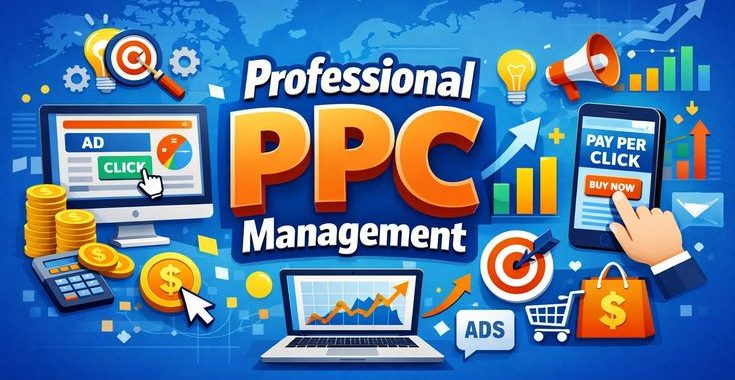
AI in PPC Management: How Automation Is Changing Paid Advertising

Introduction — The Evolution of PPC Advertising

  • Pay-Per-Click (PPC) advertising has become one of the fastest ways for businesses to generate traffic and leads.

  • Earlier, PPC campaigns required heavy manual work and constant monitoring.

  • Marketers had to manually adjust bids, keywords, targeting, and budgets.

  • Human decision-making often caused delays and inefficiencies.

  • With the rise of Artificial Intelligence (AI), PPC management has transformed dramatically.

  • AI now analyzes massive amounts of data in seconds.

  • Automation helps advertisers make smarter and faster decisions.

  • Businesses achieve better results with less manual effort.

  • AI-driven PPC campaigns improve performance while reducing wasted ad spend.

  • Automation is reshaping how digital marketers plan and manage paid advertising.

What Is AI in PPC Management?

  • AI in PPC refers to the use of machine learning and algorithms to optimize advertising campaigns automatically.

  • AI systems analyze user behavior, search intent, and performance data.

  • Automation adjusts campaigns in real time based on results.

  • AI predicts which users are more likely to convert.

  • Platforms use AI to optimize bids and ad placements.

  • AI removes guesswork from campaign management.

  • Machine learning continuously improves campaign performance.

  • AI tools help marketers focus on strategy instead of manual tasks.

  • Data-driven optimization increases efficiency.

  • PPC becomes smarter and more scalable through AI.

Continue reading

Email Marketing Tools — Complete Guide for Businesses and Marketers

Introduction — What Are Email Marketing Tools?

  • Email marketing tools are software platforms used to create, send, manage, and track email campaigns.

  • These tools help businesses communicate directly with customers through emails.

  • They automate marketing processes and save time for marketers.

  • Email marketing tools allow businesses to send newsletters, promotional offers, updates, and announcements.

  • Modern tools provide analytics to measure campaign performance.

  • Businesses use these platforms to nurture leads and build long-term customer relationships.

  • Email remains one of the highest ROI digital marketing channels worldwide.

  • Email tools simplify audience segmentation and personalization.

  • Automation features allow businesses to send emails at the right time automatically.

  • Small businesses and large companies both rely on email marketing tools for growth.


Why Email Marketing Tools Are Important

  • Manual emailing is time-consuming and inefficient.

  • Tools allow sending thousands of emails instantly.

  • Automation improves marketing efficiency.

  • Businesses can track open rates, clicks, and conversions.

  • Professional templates improve brand image.

  • Audience segmentation increases engagement.

  • Personalized emails improve customer experience.

  • Scheduling features ensure consistent communication.

  • Tools help comply with spam and privacy regulations.

  • Data insights help optimize future campaigns.

Continue reading

Content Marketing Trends to Watch in 2026

INTRODUCTION

The content marketing landscape has shifted dramatically. With AI-driven answer engines—Google’s AI Overviews, Perplexity, and ChatGPT Search—now handling millions of queries daily, brands must rethink how they create, structure, and distribute content. Here are the defining trends reshaping content marketing in 2026.

CONTENT MARKETING TRENDS

01 Answer Engine Optimization (AEO) replaces traditional SEO core trends.

The biggest shift in 2026 is the migration from search engine optimization to answer engine optimization. Users increasingly ask questions in natural language and expect direct, cited answers—not a list of blue links. AEO focuses on structuring content so AI systems can extract, cite, and surface it as a primary answer. This means using clear question-and-answer formatting, schema markup (FAQPage, HowTo, Article), short declarative sentences, and authoritative sourcing. Brands that structure content for machines while writing for humans will win the visibility game in 2026.

02 AI-assisted content with a human authority layer

AI writing tools are table stakes now—the differentiator is the human expert layer on top. Google’s E-E-A-T (Experience, Expertise, Authoritativeness, Trustworthiness) signals are more critical than ever as answer engines prioritize credible, cited sources. In 2026, the winning formula is AI for speed and structure + human subject-matter experts for depth, opinion, and original research. First-hand data, original studies, and expert quotes are among the strongest signals for getting cited by AI systems.

03 Zero-click content & snippet-first writing AEO Priority

More than 60% of searches in 2026 end without a click. Rather than fighting this, smart content marketers embrace it—by becoming the source AI engines pull from. Snippet-first writing means leading with definitions, using numbered lists for processes, and formatting data in tables. The goal is not just traffic, but citation authority: being the brand that AI cites builds trust and brand recognition even without a click.

04Video and multimodal content dominance

Short-form video remains the highest-engagement format across platforms, but 2026 sees the rise of multimodal content strategies — combining video, text transcripts, image carousels, and audio to serve multiple discovery paths simultaneously. AI search engines now index video transcripts and image alt text alongside article content. Brands creating content in multiple formats from a single source (“content atomization”) are maximizing discoverability across traditional search, AI engines, and social platforms.

05 Hyper-personalization at scale

With AI handling personalization infrastructure, brands can now serve dynamically tailored content experiences — different messaging for different buyer stages, industries, or behaviors — without massive manual effort. The trend in 2026 is moving from segment-level personalization to individual-level content journeys, especially in B2B and SaaS. Personalized content drives 3–5x higher engagement compared to generic content, and AI makes it operationally viable for mid-sized teams.

06 Community-led content ecosystems

As AI floods the web with generic content, authentic community voices are rising in authority. Brands investing in owned communities—forums, Discord servers, Slack groups, and membership platforms—are generating unique user-generated content that AI systems cannot replicate. This UGC becomes a trust signal, a content source, and a moat. Reddit-style discussions, niche community Q&As, and brand-hosted expert forums are increasingly being cited directly by AI answer engines.

07 Interactive & experience-driven content

Static long-form articles are losing ground to interactive tools — calculators, assessments, configurators, and AI-powered chatbots embedded directly in content. These “content tools” achieve much longer dwell times, generate first-party data, and deliver personalized outputs that static content cannot. In 2026, the highest-performing content pieces are often experiences, not articles.

Frequently Asked Questions

1. What is Answer Engine Optimization (AEO)?
AEO is the practice of structuring content so AI-powered answer engines (like Google’s AI Overviews, Perplexity, and ChatGPT Search) can extract and cite it as a direct answer. It involves clear question-answer formatting, schema markup, concise definitions, and authoritative sourcing.
2. What content formats work best for AEO in 2026?
FAQ sections, definition boxes, numbered how-to lists, comparison tables, and concise “Quick Answer” summaries at the top of articles perform best. Schema markup (FAQPage, HowTo, and Article) significantly improves the chances of being extracted by AI engines.
3. How can brands stand out when AI generates so much content?
Original research, first-party data, expert interviews, community-generated content, and interactive tools are the strongest differentiators in 2026. These assets cannot be easily replicated by AI and are actively prioritized by both human readers and AI citation algorithms.

CONCLUSION

The bottom line: 2026 rewards content that is structured for machines, authored by experts, and experienced by humans. The brands leading content marketing this year are those that have adapted their strategy to the era of AI-driven answers—optimizing not just for clicks but for citations, authority, and trust. Start with AEO fundamentals, invest in original research, and build content that earns its place as the definitive answer.
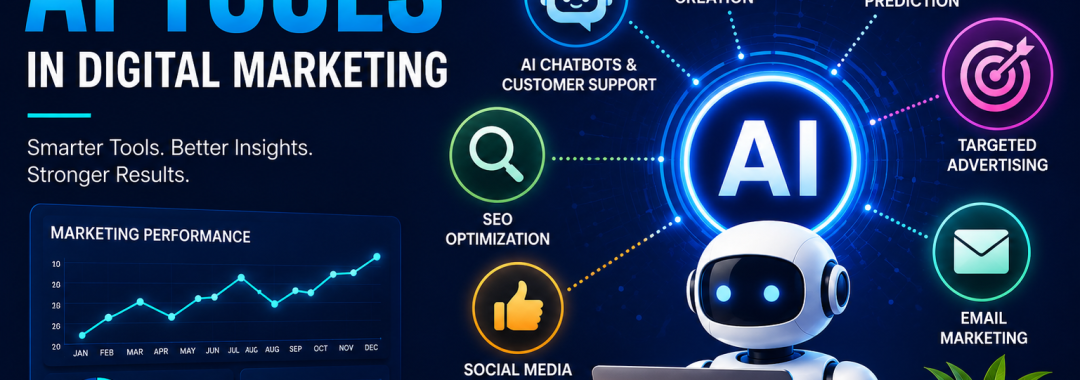
 

AI Tools Used in Social Media Marketing (SMM)

Introduction to AI in Social Media Marketing

  • Artificial Intelligence (AI) is transforming the way brands approach Social Media Marketing (SMM)

  • AI helps marketers automate tasks, analyze data, and make smarter decisions faster

  • Social media platforms generate massive amounts of data, which AI tools can process efficiently

  • AI-powered SMM tools save time, reduce human error, and improve campaign performance

  • From content creation to audience targeting, AI is now a core part of modern SMM strategies

  • Businesses of all sizes, especially small and medium enterprises, are adopting AI tools for social media growth

Continue reading

SEO Studio Tools: The Ultimate Guide to Boost Website Rankings & Performance


Introduction to SEO Studio Tools

  • SEO Studio Tools are a collection of professional SEO software and platforms

  • They help businesses, marketers, and agencies:

    • Improve search engine rankings

    • Analyze website performance

    • Track keywords and competitors

  • SEO Studio Tools are designed for:

    • Beginners

    • Advanced SEO professionals

    • Digital marketing agencies

  • These tools simplify complex SEO tasks using:

    • Automation

    • Data-driven insights

    • Real-time reporting

  • SEO Studio Tools are essential for:

    • Organic growth

    • Brand visibility

    • Long-term digital success

Continue reading

How Digital Marketing Helps Small Businessmen Grow Faster

Introduction — Why Digital Marketing Matters for Small Businesses

  • Digital marketing has completely changed how small businesses compete in today’s marketplace.

  • Earlier, only large companies could afford advertising through TV, newspapers, and billboards.

  • Today, even a small local business can reach thousands of potential customers using online platforms.

  • Digital marketing removes geographical limitations and allows businesses to grow beyond local boundaries.

  • Small businessmen can promote products or services with a limited budget and still achieve strong results.

  • Online marketing helps businesses build visibility, trust, and customer relationships faster than traditional methods.

  • Consumers now search online before buying anything, making digital presence essential.

  • Businesses without digital marketing often lose customers to competitors who appear online first.

  • Digital marketing provides measurable results, helping owners understand what works and what doesn’t.

  • Faster growth becomes possible because marketing, communication, and sales happen simultaneously online.

Continue reading

Web Development: A Complete In-Depth Guide for Modern Businesses


Introduction to Web Development

  • Web development refers to the process of creating, building, and maintaining websites and web applications

  • It combines coding, design, content, performance optimization, and security

  • Every business today needs a strong web presence to:

    • Build credibility

    • Reach a global audience

    • Generate leads and sales

  • A well-developed website acts as:

    • A digital storefront

    • A marketing engine

    • A customer support platform

Continue reading

PPC Management: A Complete Guide to Pay-Per-Click Advertising Success

Introduction to PPC Management

Pay-Per-Click (PPC) management is one of the most powerful digital marketing strategies for businesses that want instant visibility, targeted traffic, and measurable results. Unlike organic marketing methods that take time, PPC advertising allows brands to appear at the top of search engines, social media platforms, and websites almost immediately.

PPC management involves planning, creating, optimizing, and monitoring paid advertising campaigns where advertisers pay a fee every time their ad is clicked. When managed properly, PPC delivers high ROI, qualified leads, and scalable growth for businesses of all sizes.

In today’s competitive digital landscape, professional PPC management is no longer optional—it’s essential.Continue reading